
Bluetooth Tracker Battery and Sound Testing: Define the Conditions Before the Claims
蓝牙防丢器的电池与声学验收:先定义条件,再承诺性能
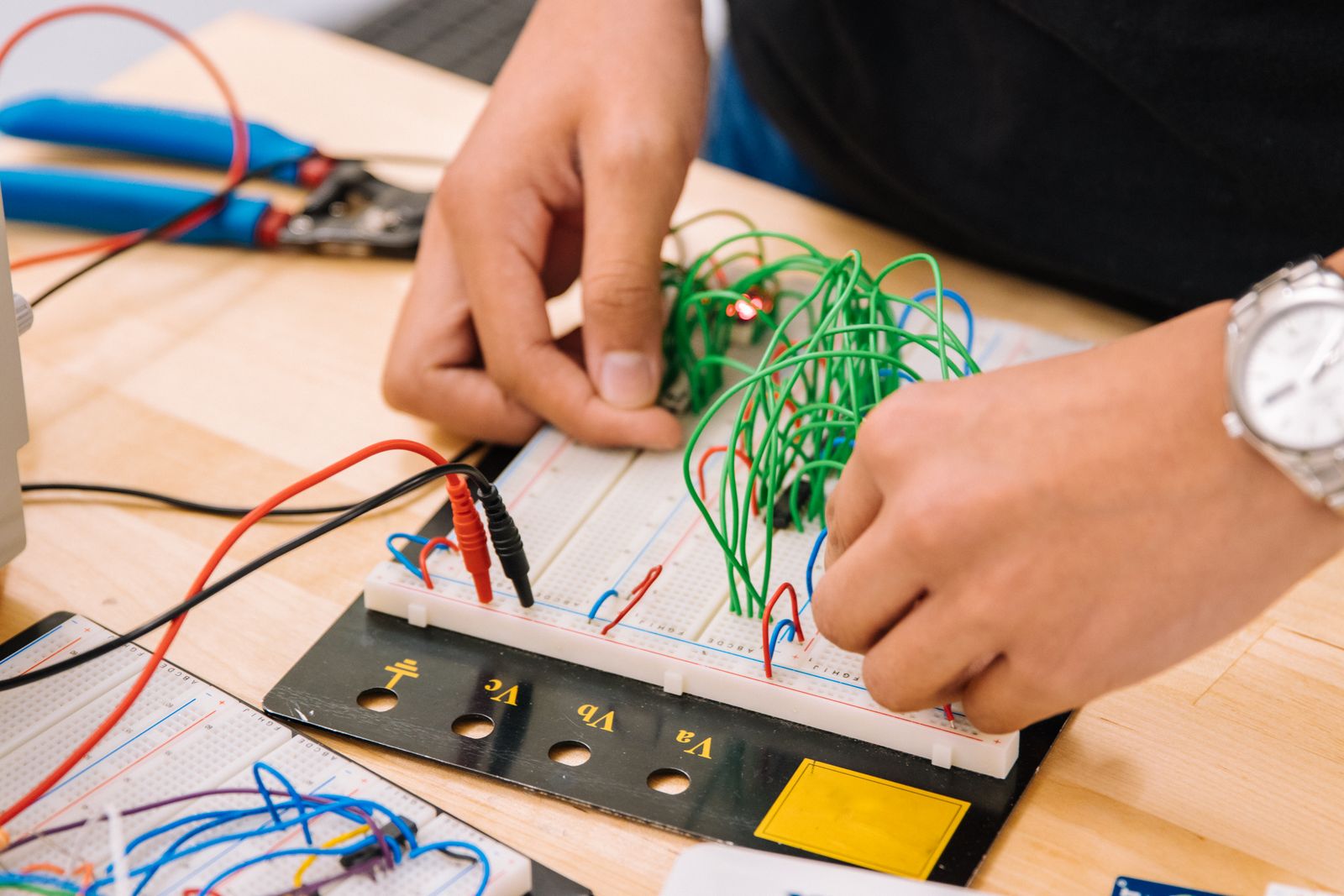
电子测试场景示意图。图片来源:Jeswin Thomas,按 Pexels License 使用。
For a Bluetooth anti-lost device, battery endurance and an audible finding sound belong in the same product brief. Brands should define the operating conditions, validate the assembled product, and distinguish platform requirements from project-specific performance goals.
1. Start with a finding experience—not a headline number
A tracker may look convincing on a specification sheet yet leave important questions unanswered: How often is it asked to ring? Is it tested in its final enclosure? Can the user hear it inside the intended bag or wallet?
These questions matter for projects using Apple Find My or Google Find Hub. Google’s public Find Hub specification defines ring commands and ring-state responses. Separately, Google’s support documentation explains how nearby participating devices detect items through Bluetooth and report where they were detected. A nearby sound test and a network-assisted finding test therefore answer different questions. [2][3]
2. Make battery claims conditional and testable
As a project-planning recommendation, agree on a usage profile before setting a battery-life target. Record the battery type, hardware and firmware versions, operating temperature range, expected ringing frequency and duration, and the criterion for the end of usable service.
Then evaluate representative units under that profile. Include low-battery conditions and repeated ringing in the test plan rather than relying only on an idle-state observation. Report an estimate as an estimate, together with its assumptions; do not present it as a measured lifetime.
The commercial goal is not to choose the largest headline figure. It is to give buyers a claim whose test conditions, sample scope and limitations can be explained. This article makes no battery-life claim for any Stellarrisetech model.
3. Test sound as the customer will hear it
A useful acoustic brief specifies more than a sound-level number. Define the measurement distance, product orientation, enclosure condition, background noise and measurement method. Test the finished assembly and add representative carrying scenarios, such as a closed pouch, where relevant to the intended use.
Also verify the control sequence: start the sound, confirm the response, stop it and check timeout behavior. Google’s published ring operation includes timeout and state reporting; this makes command handling a distinct validation topic rather than proof of acoustic performance. [3]
These are suggested project acceptance checks, not a substitute for the current platform requirements. There is no universal sound-level or battery-life threshold proposed here, and a volume setting must not be presented as a verified decibel value.
4. Keep ecosystem requirements and marketing claims separate
Apple directs accessory developers and manufacturers to its MFi Program for Find My technical specifications and resources. Google’s locator-tag requirements point to the Find Hub network specification and unwanted-tracking prevention requirements. [1][4]
Confirm the applicable requirements for the actual product configuration. Do not assume that a chip choice, a working prototype or an audible buzzer proves completed product certification. Ordinary item-finding sound tests also do not replace unwanted-tracking protection validation. Support for either ecosystem, or a switching route between them, must be confirmed for the chosen model; simultaneous operation is not implied.
5. Turn the brief into a Stellarrisetech project
Stellarrisetech’s published service scope provides three routes. OEM starts from an existing tracker platform with branding, shell and packaging choices. ODM addresses a custom form factor through structure, PCBA, antenna and firmware planning, followed by sample validation. Embedded solutions consider tracking inside products such as bags, wallets and accessories, with attention to board placement, battery access and acoustic output. [5][6][7]
For a productive review, prepare the target market, ecosystem, product drawings or dimensions, quantity range, battery strategy and intended carrying conditions. Ask for the proposed sample configuration and acceptance plan before converting a design target into packaging copy.
Discuss your product type, battery and sound priorities, and customization scope with Stellarrisetech. The appropriate route and performance commitments should be confirmed for the specific project.
对蓝牙防丢器而言,电池续航与可听见的寻物声音应在同一份产品需求中定义。品牌方需要明确使用条件、验证整机表现,并将平台要求与项目自行设定的性能目标分开。
1. 从寻物体验出发,而不是先写参数
一款防丢器的参数表可能很有吸引力,却没有回答关键问题:用户多频繁地触发响铃?测试时是否装入最终外壳?放在目标包袋或钱包中,用户能否听见?
这些问题同样适用于采用 Apple Find My 或 Google Find Hub 的项目。Google 公开的 Find Hub 规范定义了响铃指令及响铃状态反馈;其帮助文档则另外说明,附近参与网络的设备通过蓝牙发现物品,并报告发现物品的位置。因此,近距离声音测试与网络辅助寻物测试,回答的是不同的问题。[2][3]
2. 让续航承诺有条件、可验证
作为项目规划建议,应先约定使用模型,再设定续航目标。需要记录电池类型、软硬件版本、工作温度范围、预期响铃频率与每次时长,以及判断有效使用寿命结束的条件。
随后按照该模型评估具有代表性的样机。测试计划应覆盖低电量和反复响铃情形,而不只观察静置状态。估算值应明确标为估算并列出假设,不能当作实测寿命宣传。
商业沟通的目标不是选择最大的宣传数字,而是提供能够解释测试条件、样本范围和适用边界的性能承诺。本文不对任何 Stellarrisetech 型号作出具体续航承诺。
3. 按用户实际听到的效果验收声音
有效的声学需求不能只有一个声级数字,还应定义测量距离、产品朝向、外壳状态、背景噪声与测量方法。需要测试最终装配状态,并根据预期用途加入封闭收纳袋等有代表性的携带情形。
同时验证控制流程:启动声音、确认响应、停止声音,并检查超时行为。Google 公布的响铃操作包含超时和状态反馈,因此指令处理应单独验证;指令成功不等于声学性能合格。[3]
这些是建议的项目验收项,并不替代平台现行要求。本文不提出通用声级或续航门槛,也不能将某个音量档位当作经过验证的分贝数值。
4. 将平台要求与营销承诺分开
Apple 指引配件开发者与制造商通过 MFi 计划获取 Find My 技术规范和资源。Google 的定位标签要求则明确引用 Find Hub 网络规范及防止不必要跟踪的相关要求。[1][4]
应针对实际产品配置确认适用要求,不能将某款芯片、可运行样机或能够发声的蜂鸣器等同于整机已完成认证。普通寻物声音测试也不能替代防止不必要跟踪保护机制的验证。是否支持某个平台,或是否可在两种平台之间切换,都需要按具体型号确认;不应由此暗示两种网络可以同时运行。
5. 将需求转化为 Stellarrisetech 项目
根据 Stellarrisetech 已公布的服务范围,可以从三条路径推进。OEM 从现有防丢器平台出发,选择品牌标识、外壳和包装方案;ODM 面向定制外形,开展结构、PCBA、天线与固件规划,并进行样机验证;嵌入式方案 则考虑将寻物功能集成到箱包、钱包及配件等产品中,关注电路板布置、电池可维护性和声音输出。[5][6][7]
为了提高评审效率,建议准备目标市场、平台、产品图纸或尺寸、数量范围、电池策略及预期携带条件。在把设计目标写进包装文案之前,先确认建议样机配置与验收计划。
与 Stellarrisetech 沟通产品类型、电池和声音方面的优先级,以及定制范围。具体开发路径与性能承诺应在相应项目中确认。
Public sources / 公开来源
查阅日期:2026-10-04。技术事实与公司服务声明分别引用;测试清单为本文综合提出的项目建议,不冒充平台认证标准。
- Apple — Find My network: Developing for Find My
- Google — How Find Hub protects your data
- Google — Find Hub network accessory specification(Ring operation / Read ringing state)
- Google — Locator Tags requirements
- Stellarrisetech — OEM services
- Stellarrisetech — ODM services
- Stellarrisetech — Embedded solutions