
Bluetooth Tracker Design: Why Antenna, Enclosure and Platform Planning Must Work Together
蓝牙定位器设计:为什么天线、外壳与平台规划必须协同
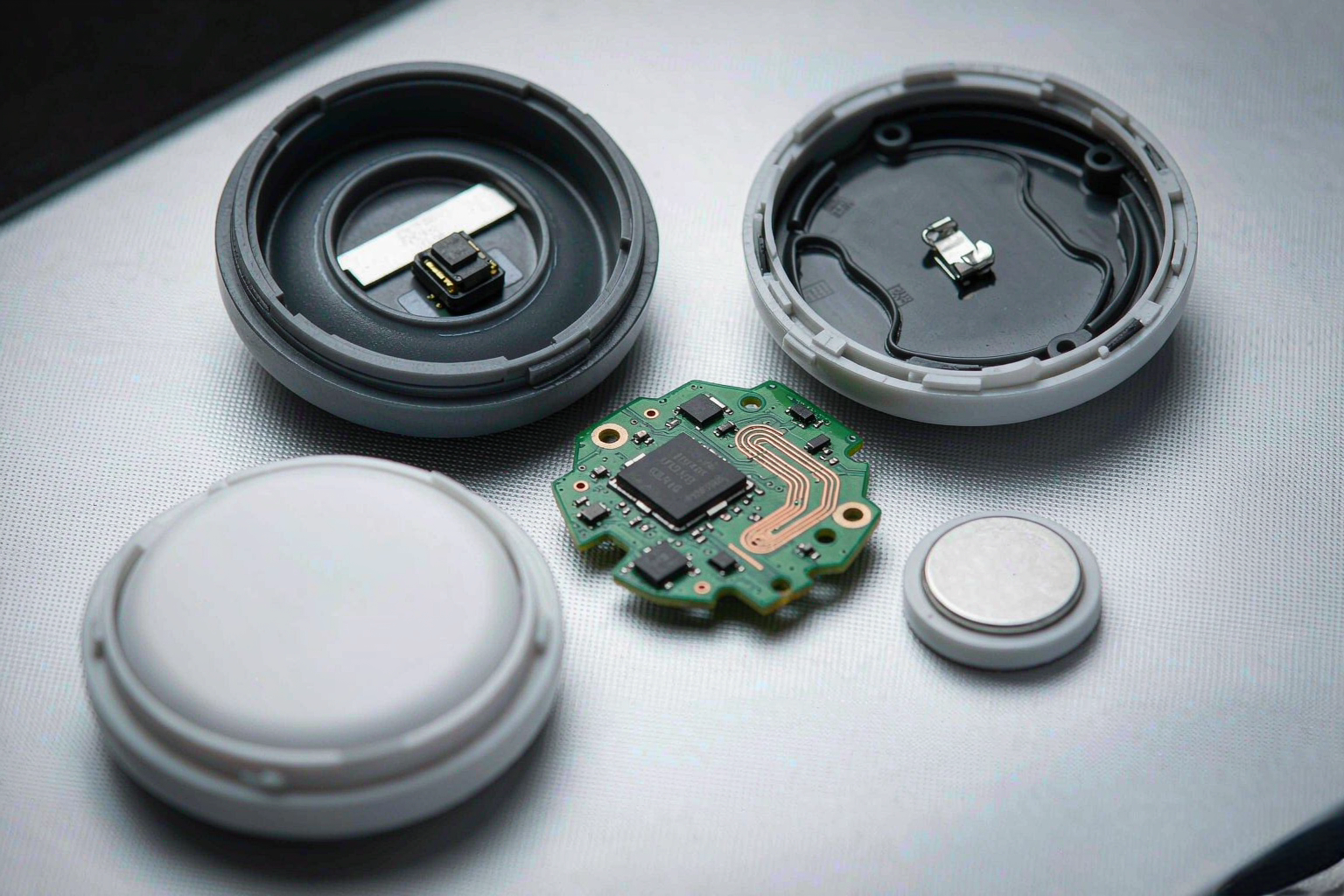
蓝牙定位器工程场景示意图,展示外壳、PCBA、天线布局和电池规划;为本文生成的说明性图片,并非 Stellarrisetech 产品实拍或测试结果。
A Bluetooth tracker is a small system, not only a radio board inside a shell. Antenna placement, enclosure geometry, battery access, firmware behavior and the selected finding ecosystem should be reviewed as one product brief.
1. The enclosure changes the radio design
A custom form factor can change the available antenna area, the distance between the antenna and nearby materials, and the way the product is carried. The right design question is not simply whether a prototype advertises, but whether the assembled product keeps a stable user experience in its intended position and orientation.
2. Platform requirements belong in the brief
Apple states that developers and manufacturers connecting an accessory to the Find My network should enroll in the MFi Program to access the technical specifications and resources. Google’s Locator Tags documentation requires applicable Find Hub network behavior and unwanted-tracking prevention requirements for certification. A working Bluetooth signal alone does not prove that a finished product meets either platform’s requirements.
3. Validate the assembled sample
Before tooling or production handoff, review the shell, PCBA, antenna, firmware, battery arrangement and user flow together. Sample checks can include pairing, antenna behavior, battery access, assembly quality, reliability and the intended finding experience. These are project checks, not a substitute for platform certification.
4. A practical ODM route
Stellarrisetech’s published ODM route starts by defining the target user, environment, platform and business goal. The design scope can include structure, PCBA, antenna, firmware, packaging and sample direction, followed by validation before manufacturing handoff. This process helps turn a compact product idea into a controlled production route.
Share the target form factor, ecosystem, carrying environment, quantity and customization scope with Stellarrisetech for an OEM, ODM or embedded route review.
蓝牙定位器不是把无线电路板放进外壳就完成的产品,而是一个小型系统。天线位置、外壳几何、电池维护、固件行为和所选寻物生态,都应放在同一份产品需求中评审。
1. 外壳会改变无线设计
定制外形可能改变天线可用面积、天线与周围材料的距离,以及产品在实际携带状态下的表现。设计问题不只是样机能否发出蓝牙信号,还要确认成品在预期位置和朝向下能否保持稳定的使用体验。
2. 平台要求应写进需求书
Apple 说明,开发者和制造商如要让配件接入 Find My 网络,应加入 MFi 计划,以获得创建产品所需的技术规范和资源。Google 的 Locator Tags 文档要求符合适用的 Find Hub 网络行为和防止不必要跟踪要求。蓝牙信号能够正常广播,并不等于整机已经满足任一平台的要求。
3. 验证最终装配样机
在开模或移交量产之前,应把外壳、PCBA、天线、固件、电池布置和用户流程放在一起评审。样机检查可以包括配对、天线表现、电池维护、装配质量、可靠性和预期寻物体验。这些属于项目检查,不能替代平台认证。
4. 可控的 ODM 路径
Stellarrisetech 已公布的 ODM 流程,先明确目标用户、使用环境、平台和业务目标,再规划结构、PCBA、天线、固件、包装及样机方向,并在移交制造前进行验证。这种方式有助于把小型产品构想转化为可控的生产路线。
可以向 Stellarrisetech 提供目标外形、生态平台、携带环境、数量及定制范围,评估 OEM、ODM 或嵌入式方案。
Public sources / 公开来源
- Apple Developer — Find My network
- Google for Developers — Locator Tags
- Stellarrisetech — Custom Bluetooth Tracker ODM
本文为独立组织的行业科普与项目规划建议,不构成平台认证承诺或具体型号性能承诺。