
Bluetooth Tracker FAQ · 蓝牙防丢器问答
芯片与生态层:Find My / Find Hub 如何从「卖硬件」变成「卖接入权」
The Chip & Ecosystem Layer: How Find My / Find Hub Turned “Selling Hardware” into “Selling Network Access”
导语 / Introduction
过去六天,我们聊过双系统查找网络的趋势、NFC 触碰识别、AirTag 2 的硬件升级、SmartTag 3 的跨平台策略、安全隐私与成本账。今天我们把镜头再拉深一层——不看某一颗防丢器,而是看防丢器下面那颗芯片,以及它背后的「认证经济」。当一颗小小的蓝牙芯片决定了一款产品能否接入全球 25 亿台设备的众包定位网络,「卖防丢器」这件事,正在悄悄变成「卖一张接入权凭证」。
Over the past six days we’ve covered the dual-network trend, NFC tap-to-identify, AirTag 2’s hardware upgrade, SmartTag 3’s cross-platform strategy, safety & privacy, and the cost equation. Today we zoom in one more layer — not at any single tracker, but at the chip beneath it, and the “certification economy” behind it. When a tiny Bluetooth chip decides whether a product can join the crowdsourced location network of 2.5 billion devices, “selling a tracker” is quietly turning into “selling a ticket to the network.”
Q1:为什么说 Find My 正在把「定位」变成「公共基础设施」?
A: 传统智能硬件做定位,门槛极高:品牌要么自建 App、自建云服务、自建定位网络,要么退而求其次做「点对点蓝牙追踪」——但手机一离开就失联。这套模式每一家都在重复「铺铁路」,每条铁路却只覆盖自己的一小段,用户买 A 品牌要下载一个 App,买 B 品牌又要再下一个,碎片化严重。
Find My 的解法是把「定位能力」从「自建基础设施」变成「接入公共基础设施」。截至 2026 年,苹果全球活跃设备安装量已超过 25 亿台,每一台开启「查找」的 iPhone、iPad、Mac 都在默默扮演一个「微型定位基站」。丢失的认证配件持续广播低功耗蓝牙(BLE, Bluetooth Low Energy)信号,附近任何一台苹果设备都能匿名检测并上传加密位置。基础设施一旦建成,边际使用成本趋近于零——这就是「卖接入权」的商业底层逻辑。
Q1: Why is Find My turning “location” into public infrastructure?
A: Building location into a smart accessory used to have a high barrier: a brand had to build its own app, its own cloud, and its own location network — or settle for point-to-point Bluetooth tracking that dies the moment the phone is out of range. Every brand was “laying its own railway,” and each railway only covered a small stretch, forcing users to download a separate app for each brand.
Find My’s solution turns “location capability” from self-built infrastructure into access to public infrastructure. As of 2026, Apple’s active device install base exceeds 2.5 billion, and every iPhone, iPad, and Mac with Find My enabled quietly acts as a “micro-location base station.” A lost certified accessory keeps broadcasting a low-power BLE (Bluetooth Low Energy) signal, and any nearby Apple device can anonymously detect and upload its encrypted location. Once the infrastructure exists, marginal cost approaches zero — that is the underlying business logic of “selling access.”
Q2:Find My 的认证经济到底有多大?「认证型号超 3000 个、出货量 3 亿」意味着什么?
A: 2021 年苹果开放 Find My 网络时,很多人只把它当作「AirTag 之外多一个兼容选项」。四年多过去,这个判断被严重低估:截至 2026 年,通过 Find My 认证的型号已超 3000 个,第三方产品出货量预计达到 3 亿只/年(数据来源:搜狐科技产业分析文章,属第三方预估,非苹果官方口径,具体数字存疑)。
这背后是商业关系的重构:传统模式是「品牌卖硬件、消费者买功能」;Find My 模式下,品牌通过 MFi(Made for iPhone/iPad)认证获得「接入权」,消费者买的实际上是「接入一张 25 亿台设备网络的权利」。一件「Works with Apple Find My」的护照夹、行李牌或充电宝,卖的不只是一块带蓝牙的塑料/布艺,而是一张「进入全球众包定位网的凭证」。这也解释了为何非认证产品只能做 10–30 米的点对点蓝牙追踪,而认证产品接入的是覆盖全球的网络——价值边界由这张「凭证」决定。
Q2: How big is the Find My certification economy — what do “3,000+ certified models” and “300 million units” actually mean?
A: When Apple opened up Find My in 2021, many saw it as just “one more compatibility option beyond AirTag.” Four-plus years later that judgment was badly underestimated: as of 2026, the number of Find My-certified models has surpassed 3,000, and third-party shipments are expected to reach 300 million units per year (source: a Sohu tech industry analysis article — a third-party estimate, not Apple’s official figure, so treat the exact numbers with caution).
Behind this is a reshaping of the business relationship. In the traditional model, a brand sells hardware and the consumer buys a function; under Find My, the brand earns “access” through MFi (Made for iPhone/iPad) certification, and the consumer is really buying “the right to join a 2.5-billion-device network.” A “Works with Apple Find My” passport holder, luggage tag, or power bank is not just selling a piece of Bluetooth-enabled plastic or fabric — it’s selling “a ticket into the global crowdsourced location network.” This is also why non-certified products can only do 10–30 m point-to-point tracking, while certified products join a global network — the value boundary is defined by that “ticket.”
Q3:全球第二家拿到 Find My 认证的芯片,为什么值得关注?
A: 近日,深圳伦茨科技(LenzTech)发布 ST17H6x SoC 平台,宣称成为继 Nordic 之后全球第二家取得 Apple Find My「查找」认证的芯片厂商(来源:搜狐 Find My 资讯文章,厂商自我宣称,建议以苹果官方授权清单为准)。
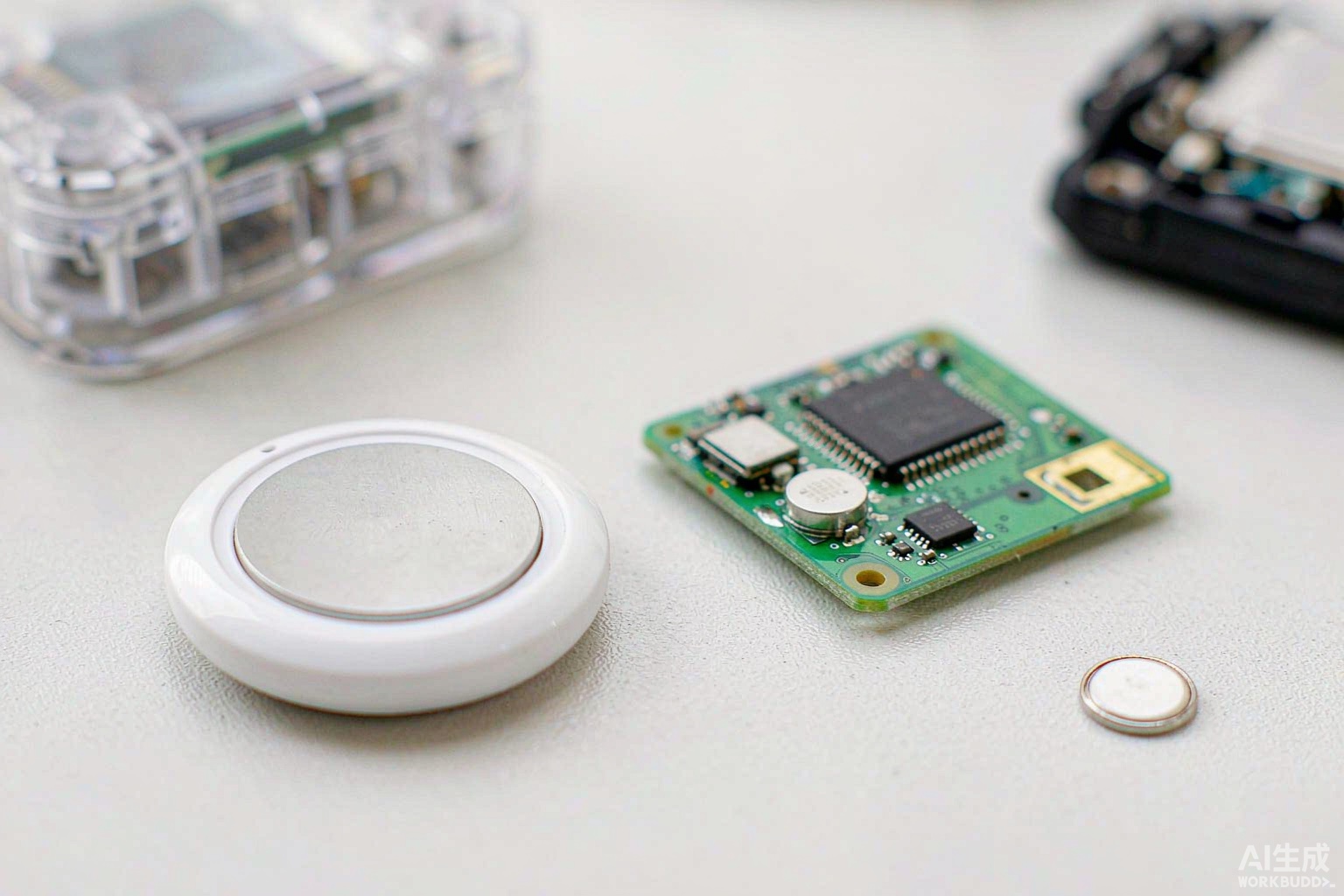
这件事的意义在于「把认证门槛下沉到芯片层」。过去,第三方想做 Find My 配件,往往要直接找 Nordic 等少数芯片方案;现在多了一家国产芯片选择,意味着中小品牌、甚至白牌工厂接入 Find My 网络的成本与技术门槛进一步降低。伦茨科技官网资料显示,其芯片内部集成了应用处理器、安全硬件处理器、ROM、Nor Flash、SRAM、Bluetooth LE、时钟管理与动态电源管理等模块,待机电流可低至 6μA,工作温度范围 -40°C 至 85°C,宣称适用于防丢器、智能标签、智能车载配件等场景(参数为厂商口径,供参考)。
同一条产业链上,国内方案商也在做「加速器」角色:例如北京自在科技宣称可把 MFi 认证周期缩短到 2 个月内、Find My 模组成本控制在 10 元级别,已助力 300 多个品牌接入。芯片与方案层的充分供给,正是「认证经济」得以爆发的燃料。
Q3: Why does the world’s second Find My-certified chip matter?
A: Recently, Shenzhen LenzTech announced its ST17H6x SoC platform, claiming to be the second chip maker worldwide to receive Apple Find My certification, after Nordic (source: a Sohu Find My news article; a vendor self-claim — verify against Apple’s official authorized list).
The significance is pushing the certification barrier down to the chip layer. Before, a third party wanting to build a Find My accessory usually had to turn to a few chip makers such as Nordic; now a domestic alternative exists, meaning the cost and technical threshold for small and even white-label brands to join Find My drops further. LenzTech’s official material states the chip integrates an application processor, a secure hardware processor, ROM, Nor Flash, SRAM, Bluetooth LE, clock management and dynamic power management, with standby current as low as 6 μA and an operating temperature range of -40°C to 85°C, targeting trackers, smart tags, and in-car accessories (vendor-specified figures, for reference only).
On the same chain, solution providers act as “accelerators”: Beijing Zizai Technology claims it can shorten MFi certification to under 2 months and hold the Find My module cost to the 10-yuan level, having already helped 300+ brands join the network. Abundant supply at the chip and solution layers is exactly the fuel behind the certification economy’s takeoff.
Q4:什么是「双系统查找芯片」?为什么它会成为新趋势?
A: 「双系统查找芯片」指一颗芯片同时支持 Apple Find My 与 Google Find Hub(原 Find My Device 网络)两套生态。过去几个月,智能防丢领域出现了一个明显趋势:越来越多产品开始同时支持苹果与谷歌两大查找网络。
以伦茨科技为例,其宣称的 ST17H65B-DD 方案同时支持 Google Find Hub(含 UWB 超宽带功能)与 Apple Find My,可根据首次配对设备自动适配其中一套网络;用户想换手机或转赠防丢器,只需恢复出厂设置即可切换到另一套生态。这意味着品牌只需备一颗芯片、一套方案,就能同时覆盖约 20 亿台苹果设备与 30 亿台安卓设备,对供应链和库存管理是极大的简化。
但要注意一个关键差异:「双网络」并不等于「同一网络」。Find My 与 Find Hub 是两个相互隔离、互不中继的众包网络——一个配对了 Find My 的标签,无法被安卓设备中继位置。所谓「双系统」,本质是「同一颗芯片可二选一、通过重置切换」,而非「同时在线双网中继」。这一点容易在营销中被模糊化,选购时务必看清产品说明。
Q4: What is a “dual-network chip,” and why is it becoming a trend?
A: A “dual-network chip” is one chip that supports both Apple Find My and Google Find Hub (formerly the Find My Device network). In recent months a clear trend has emerged in the tracking space: more and more products support both of the two major find networks at once.
Take LenzTech as an example: its claimed ST17H65B-DD solution supports Google Find Hub (including UWB) plus Apple Find My, auto-adapting to one network based on the first paired device. To switch phones or gift the tracker, the user just factory-resets it to move to the other ecosystem. This means a brand can cover roughly 2 billion Apple devices and 3 billion Android devices with one chip and one design, greatly simplifying supply chain and inventory.
But note one key distinction: “dual-network” does not mean “one network.” Find My and Find Hub are two isolated, non-relaying crowdsourced networks — a tag paired to Find My cannot have its location relayed by Android devices. “Dual-system” essentially means “one chip that can choose either network and switch via reset,” not “simultaneously relaying on both.” This point is often blurred in marketing, so read the product description carefully when buying.
Q5:「Find My 认证」到底意味着什么?有认证就一定好用吗?
A: 不一定。「Find My 认证」是苹果对第三方配件接入其查找网络的官方许可,表明产品通过了 MFi 配件规范中的蓝牙协议、加密机制与隐私合规测试,可以被 iPhone 原生「查找」App 识别、绑定,并参与全球苹果设备的匿名位置中继。
但认证保证的是「能用」,不等于「好用」或「精准」。不同认证设备在蓝牙发射功率、休眠策略、蜂鸣器音量、外壳对信号的遮挡等方面仍可能差异显著,这些恰恰决定日常体验。以某些无品牌布艺防丢器为例:它可能标注「Find My 认证」,但定位上限完全由苹果网络覆盖密度决定,设备本身并没有独立 GPS 或远程通信模块;布艺外壳过厚或含屏蔽材料,还会削弱蓝牙信号、降低被路过设备发现的概率(来源:淘宝百科对 Ztag0601 类产品的选购分析)。
此外,MFi 认证本身还有一整套「隐形门槛」:涉及硬件兼容性、固件安全、隐私保护、生产一致性四个维度的审核,工厂审核、样品送测(如 UL 实验室)都需要成本。因此,「有认证」是入场的门票,而非品质的背书——选购时仍要看具体口碑与实测,尤其是无品牌或白牌产品。
Q5: What does “Find My certified” actually mean — does certification guarantee a good product?
A: Not necessarily. “Find My certification” is Apple’s official license for a third-party accessory to join its find network, confirming the product passed the Bluetooth protocol, encryption, and privacy compliance tests in the MFi (Made for iPhone/iPad) spec, and can be recognized and paired by the native Find My app to join the anonymous location relay of Apple devices worldwide.
But certification guarantees “it works,” not that it “works well” or is “precise.” Different certified devices can still differ significantly in Bluetooth transmit power, sleep strategy, buzzer volume, and how the enclosure blocks signals — and those details decide the daily experience. Some unbranded fabric trackers, for example, may claim “Find My certified,” yet their ceiling is entirely set by Apple’s network coverage density, since the device itself has no independent GPS or cellular module; a thick or shielded fabric shell can also weaken the BLE signal and reduce the chance of being detected by passersby (source: Taobao Baike buying analysis of Ztag0601-class products).
MFi certification also carries a full set of “hidden thresholds”: it reviews hardware compatibility, firmware security, privacy protection, and production consistency across four dimensions, and factory audits plus sample testing (e.g., at UL labs) all cost money. So certification is a ticket to enter, not an endorsement of quality — when buying, especially unbranded or white-label products, still check real reviews and hands-on results.
Q6:watchOS 27 把「查找」三合一,跟防丢生态有什么关系?
A: 关系在于「入口的统一 = 生态的收敛」。在 watchOS 26 中,Apple Watch 上的查找功能被拆成「查找设备」「查找物品」「查找联系人」三款独立应用;到了 watchOS 27,苹果把它们合并成一款以地图为中心的统一「查找」App,通过左上角菜单切换查找对象,其余交互保持一致(来源:9to5Mac、MacMagazine 等媒体 walkthrough)。
对防丢生态而言,这一步释放了两个信号:一是苹果在持续强化「查找」作为系统级能力的地位——从手机到手表,查找正在变成一个无处不在、跨设备一致的默认能力;二是「物品」(Items)与「人」(People)、「设备」(Devices)在同一个界面里平起平坐,进一步把第三方认证配件(AirTag 及各类 Works with Apple Find My 产品)和原生设备拉到同一层级,模糊了「第一方」与「第三方」的边界。这正呼应了 Q1/Q2 讲的「卖接入权」逻辑:苹果卖的不是某一颗 AirTag,而是一整套「万物皆可查」的生态位。
Q6: watchOS 27 merged three “Find” apps into one — what does that have to do with the tracker ecosystem?
A: The connection is that unifying the entry point = consolidating the ecosystem. In watchOS 26, Find My on Apple Watch was split into three separate apps — Find Devices, Find Items, and Find People; in watchOS 27, Apple merged them into one map-centric unified Find My app, switching targets via a top-left menu with consistent interaction everywhere else (source: walkthroughs by 9to5Mac, MacMagazine, and others).
For the tracker ecosystem this sends two signals. First, Apple is continuing to elevate Find My as a system-level capability — from phone to watch, “finding” is becoming a ubiquitous, cross-device-consistent default. Second, “Items” now sits on equal footing with “People” and “Devices” in the same interface, further pulling third-party certified accessories (AirTag and all kinds of “Works with Apple Find My” products) onto the same tier as native devices, blurring the line between “first-party” and “third-party.” This echoes the “selling access” logic in Q1/Q2: Apple isn’t selling any single AirTag, but an entire ecosystem position of “everything can be found.”
Q7:作为普通消费者,我该从这波「芯片 + 认证经济」里读懂什么?
A: 三个实用判断,帮你在五花八门的防丢器里少踩坑:
1. 认准「Works with Apple Find My」徽标,但别神化它。徽标意味着「能接入全球网络」,这是硬性分水岭;但它不保证精准度、续航或做工,无品牌/白牌产品尤其要看实测。
2. 「双系统」「双网络」要看清楚是「二选一重置切换」还是「同时双网中继」。目前主流是前者(同一颗芯片可切换生态,如伦茨 ST17H65B-DD、绿联 FineTrack 等),后者尚未成为行业常态,营销措辞里的「双网」容易被混淆。
3. 芯片与方案的充分竞争对消费者是好事。第二家 Find My 认证芯片厂商出现、国产方案把模组成本压到 10 元级,最终会传导为终端价格更便宜、品类更丰富(从保温杯、电动车到行李箱都在接入)。「定位」正在从少数硬件的专属功能,变成一件很便宜、很普通的标配——这是这轮变化对你最直接的红利。
注:本文涉及的认证数量、出货量、芯片参数等数据,多数来自厂商自我宣称或第三方产业分析,未经苹果/谷歌官方逐一确认,实际数字可能存在偏差,请以官方口径为准。
Q7: As an ordinary consumer, what should I take away from this “chip + certification economy” wave?
A: Three practical takeaways to help you avoid the pitfalls in a sea of trackers:
1. Look for the “Works with Apple Find My” badge, but don’t over-glorify it. The badge means “can join the global network” — a hard dividing line; but it doesn’t guarantee precision, battery life, or build quality. For unbranded/white-label products especially, check hands-on reviews.
2. For “dual-system”/”dual-network” claims, verify whether it’s “choose one and reset to switch” or “simultaneous dual-network relay.” Today the former dominates (one chip that can switch ecosystems, like LenzTech ST17H65B-DD or Ugreen FineTrack), while the latter is not yet an industry norm — “dual-network” wording in marketing is easy to confuse.
3. More competition at the chip and solution layers is good news for you. A second Find My-certified chip maker and domestic solutions pushing module cost to the 10-yuan level will eventually translate into cheaper prices and richer categories (from thermos bottles to e-bikes to luggage, everything is joining). “Location” is shifting from an exclusive feature of a few devices to a cheap, ordinary default — that is the most direct dividend of this wave for you.
Note: Most figures in this article — certified-model counts, shipment volumes, and chip specs — come from vendor self-claims or third-party industry analysis, not individually confirmed by Apple or Google, and may differ from official numbers. Please refer to official sources.
要点总结 / Key Takeaways
- 商业逻辑变了:Find My 把「定位」从自建基础设施变成接入公共基础设施,边际成本趋近于零,商业本质从「卖硬件」转向「卖接入权」。 — The business logic has shifted: from “selling hardware” to “selling network access.”
- 认证经济正在爆发:认证型号超 3000 个、第三方出货量预计达 3 亿只/年(第三方预估),背后是 25 亿台苹果设备组成的中继网络。 — The certification economy is exploding, powered by 2.5 billion Apple devices.
- 芯片层开始内卷:伦茨科技 ST17H6x 成为继 Nordic 后全球第二家 Find My 认证芯片厂商,国产方案把模组成本压到 10 元级。 — Competition is hitting the chip layer, lowering the entry barrier.
- 双网络芯片成趋势:但「双网」多为「二选一重置切换」,并非「同时双网中继」,选购需看清。 — Dual-network chips are the trend, but “dual” often means “switch by reset,” not simultaneous relay.
- 认证 ≠ 好用:MFi 认证是「入场门票」而非「品质背书」,无品牌/白牌产品仍要看实测。 — Certification is an entry ticket, not an endorsement.
- 生态在收敛:watchOS 27 把查找三合一,进一步模糊第一方与第三方的边界。 — The ecosystem is consolidating via watchOS 27.